Program Themes
Introduction
At the beginning, students will be introduced to the ideas and content of the program. We will then share our names with a fun exercise, and dive into learning some fundamental dance concepts.


Air
Air is fluid. It curves and spirals as well as rises and sinks, all qualities that can be embodied. With creative exercises, our bodies will learn about atmospheric pressure, the movement of wind globally and locally, and the forces of hurricanes and tornados.
Heat & Cold
To express the movement of fire, and it's relation to fuel, heat, and oxygen, we can expand and contract, travel up wind, and fly like embers. Rolling bodies can demonstrate the charge of a downhill avalanche and the class will be challenged to go exceedingly slow as
the march of a glacier.


Water
Water is among the most versatile forces in nature. A resting puddle is different from a drop, which is different from a waterfall. Our bodies can range in their mode of expressions. Perhaps for rain, we jump and fall, but for ocean waves we discover flowing motions.
Earth
From mud to soil, and rocks to mountains, earth lends itself to the physical exploration of shapes. The formation of igneous, metamorphic, and sedimentary rocks beckons the exploration of physical pressure to demonstrate how each of these rock forms were created.


Vegetation & Fungi
From temperate forests to tropical rainforests, Earth's vegetation and fungi kingdom are wildly diverse. We will explore the subtleties of plant life – how plants shift toward daylight, how some open and close, how wind moves a tree, and how fungi pass electrical signals.
Animals
Swim like fish, slither like snakes, fly like birds, trot like horses, rise up like bears, jump like monkeys, crawl like crabs... Animal movements are varied and rich. Students will try out the motions of many different animals as they move through the animal kingdom.

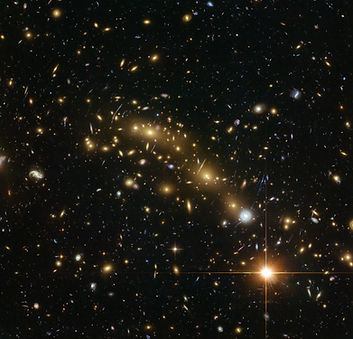
Outer Space
From the configuration of our solar system to zero gravity to black holes, students will study and exemplify the features and systems of outer space. Through a narrated story, students will have to chase their toothpaste as it floats away from them on the International Space Station.
Finale
During our final class, students will follow the narration of a story that leads them through the jungle. They will review the topics they've studied as they embody waterfalls, trees, monkeys, rocky outcroppings, the ocean, and more. Our last lesson will help students celebrate everything they've learned.

Photos
Helga Stokes. (2005). Introduction. Townshend International School, Czech Republic.
Helga Stokes. (2019). Air. The Alps, Germany.
Laura Stokes. (2026). Heat & Cold. Allegheny River, Pittsburgh, PA.
Laura Stokes. (2008). Water. Costa Rica
Helga Stokes. (2019). Earth. The Alps, Germany.
Helga Stokes (2025). Vegetation. Pittsburgh Botanic Garden, Oakdale, PA.
David Stokes (2023). Animals. Barton, VT.
Hubble Space Telescope. (2026). Outer Space. Wikipedia. https://en.wikipedia.org/wiki/Hubble_Space_Telescope.
Laura Stokes. (2008). Finale. Costa Rica